Unusually, most of my September reads were library books. Many thanks to Lancashire Libraries for the loan of Mischief Acts, The Galaxy Game, and The Dungeon Anarchist’s Cookbook.
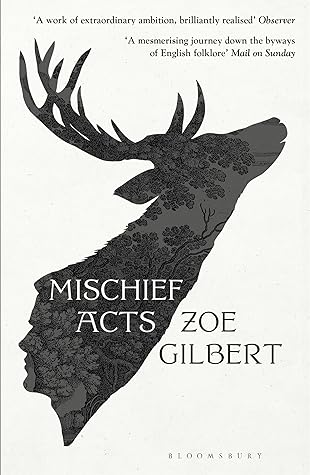
‘Mischief Acts’ by Zoe Gilbert was an impulse borrow from my local library. I picked it from the shelves on a whim, it looked interesting, but I didn’t know anything about it.
When I opened it, I found it was a mixture of short stories and poetry, which I’ve found tiring in the past. However, I took the advice of a poet friend of mine and read the poetry aloud. It does make a difference somehow.
The stories and poems are all written in different styles and voices through a period of a thousand years or so. The continuity comes from the location and the myth thereof, the stories of Herne the Hunter, the Wild Hunt, and the other creatures of the woods.
It took me a while to get into this book, but by halfway I was hooked.
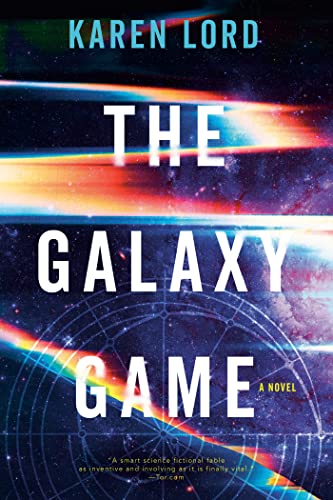
Karen Lord is a relatively new author for me, but is fast becoming a favourite. ‘The Galaxy Game’ is the sequel to ‘The Best of All Possible Worlds’ and is an ambitious galaxy wide story about two young men finding their way in a rapidly changing world. The main characters of the first book take a back seat, but are still vitally important to the story. This book explores questions of family, loyalties, and what society is and can be in the wake of a genocidal event. Two short stories are included at the back of this novel, further exploring Lord’s time travelling characters.
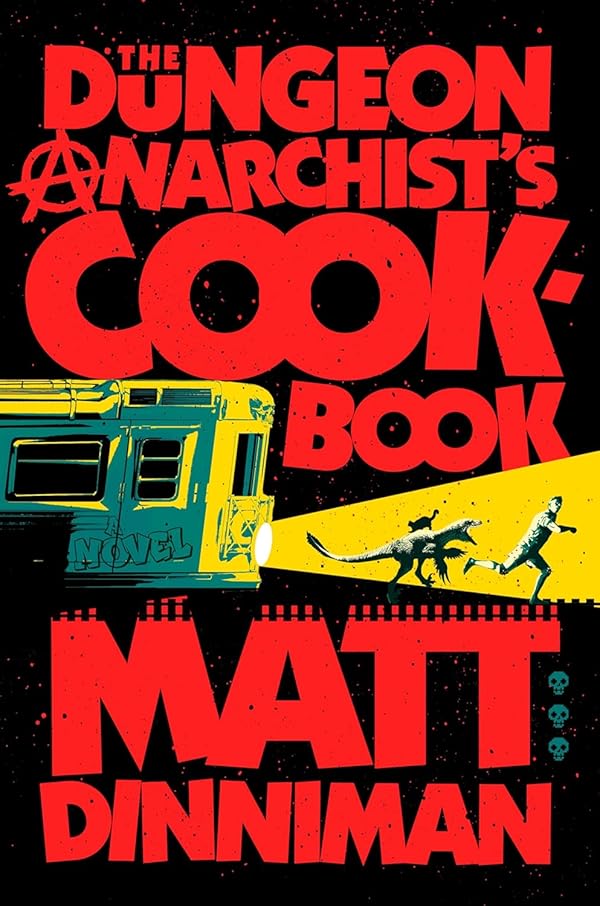
And so to the third book in the Dungeon Crawler Carl series, ‘The Dungeon Anarchist’s Cookbook’ by Matt Dinniman.
The adventure continues, amid mass slaughter, the televised extinction of the human race, and Carl’s desperate attempts to keep as many people alive as possible, including non-crawlers. They’re all in it together against the big corporations and the ultra-wealthy. Yay!
Best bit of the book was at the end, when Carl took a book with him to read during an interview, and it was ‘Stinger’, which I read a couple of weeks ago and could very easily have been a prequel to this entire series.
Oh, and a big shout out to Bomo, The Sledge and Clay-Ton, the rock trolls. Et tu Matt?
My last read of September was a re-read of Skeleton Crew, a collection of early Stephen King stories. The re-read leaked into October a little bit, but I’m counting it as a September read.
The re-read continues, and I’m beginning to realise that this is a multi-year challenge. Skeleton Crew is over forty years old now, my paperback copy, a nice companion piece to Different Seasons, is forty years old this year, and in much better nick than Different Seasons, perhaps reflecting that I have revisited one collection more than the others. What stands out from this re-read is how familiar some of the stories are compared to others. Some really do stand out from the rest.
For the uninitiated, Skeleton Crew is the second collection of Steven King short stories, Night Shift being the first.
The book kicks off with a King classic, ‘The Mist’ has been filmed, and the film is remarkably true to the story. It’s a favourite for me, the Mist itself is genuinely terrifying, and the gory scenes are … very gory. The collection is worth it for this story alone. After a terrifying summer storm, a blank mist approaches across the lake, towards the narrator’s home. He doesn’t like the look of it, but despite his trepidations, he leaves the house and heads to the supermarket with his young son to get supplies, leaving his wife in the lakeshore garden as the mist crawls across the water.
‘Here There be Tygers’ is a lovely little short story about a timid little boy who finds a tiger in the toilets at school. And it’s not a friendly tiger. I last read this in the Ellen Datlow anthology ‘Tails of Wonder and Imagination’, a collection of stories about cats and cat adjacent creatures.
‘The Monkey’ … ah, I’d forgotten about The Monkey, and hope to again. This is the tale of a nasty, cheap toy monkey possessed of a pair of clashing cymbals, and possessed by the power to kill. The protagonist has been haunted by this artifact since childhood, and has made many attempts to rid himself of it. A good read, but an unsettling one.
‘Cain Rose Up’ takes King back to a familiar theme, the college student with a gun and the willingness to use it.
‘Mrs Todd’s Shortcut’ is a favourite of mine, and one that obviously links into the Dark Tower mythos. The story has a depth of humanity to it, it’s a comfort story.
‘The Jaunt’ is pure sf horror. A scientist discovers how to teleport living things, and eventually figures out how to do it without driving sentient creatures horribly mad. Centuries later, a man on his way to Mars via the Jaunt system tells his children the story of how the problem was solved. Maybe he shouldn’t have …
‘The Wedding Gig’ is an oddity for King, there’s nothing paranormal about it. A band leader recounts his experiences with a crime boss after playing at a wedding.
‘Paranoid: A Chant’ is a story told in free verse.
‘The Raft’ is another stand out story from this collection, and other of my favourites. It was memorably filmed for one of the Creepshow films, although the ending was changed from the original genuinely creepy scene to a cheap jump scare. In the afterword to the book, King says that the story was rewritten after all copies of his orignal story (The Float) were lost. That black oily spot floating on the surface of the lake is a very memorable image.
‘Word Processor of the Gods’ looks at the power of the ‘delete’ and ‘insert’ keys, and explores the possibility of editing a life. It’s a nice, wish fulfilment story. Is it murder if someone has suddenly never existed?
‘The Man Who Would Not Shake Hands’ takes us back to the mysterious club from ‘The Breathing Method’ with a creepy story about an ancient curse.
‘Beachworld’ is another pure sf horror story about an unfriendly desert planet.
‘The Reaper’s Image’ is a lovely gothic tale about a cursed mirror. I have no recollection of reading this story before. Some stories are like that, they hide away and then creep out to surprise you again.
‘Nona’ is a truly horrible serial killer story. Did not like. Too many innocents in the body count, and the final reveal is nasty. Stories about psychopathic young men aren’t hitting well at the moment.
‘For Owen’ is a free verse poem written for King’s son.
‘Survivor Type’ is another of the stand out, memorable tales in the collection. A doctor finds himself stranded on a desert island with his medical kit, a very large amount of heroin, and very little in the way of food. When he injures himself chasing a gull, he is forced to amputate his foot, an action that takes him down a logical and horrible route.
‘Uncle Otto’s Truck’ is a brilliant story with a perfect, horrible ending. Sometimes things creep up on you.
The twin stories ‘Morning Deliveries’ and ‘Big Wheels: A Tale of the Laundry Game’ are about a milkman who makes some unusual deliveries, and the drunken laundry worker that he has a connection with.
‘Gramma’ sees King in familiar territory, with a child at risk, fighting for his life as he tries to spin a web of logic against a very illogical situation.
‘The Ballad of the Flexible Bullet’ takes us into another King trope, that of an author sinking into madness. It introduces a character I’ll never forget, the fornit Rackne, who lives in a typewriter. I love this kind of story, and am glad that fornits won’t fit into a laptop. Maybe they’ve gone extinct?
The last story in the collection is the memorable and lovely ‘The Reach’, in which an old woman looks back on her life and starts to think about the iced over reach of water between the island that she’s never left, and the mainland. Something is calling her, and she is finding it hard to resist. I love this story, and it’s a perfect end to the book.